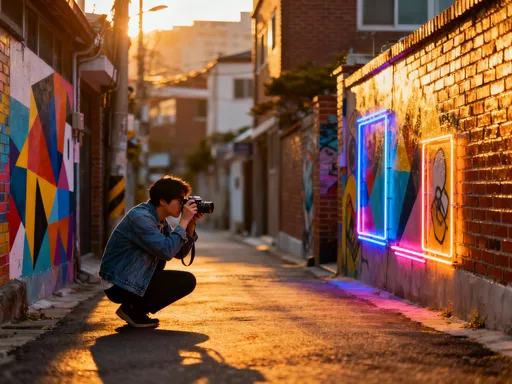
You Won’t Believe What I Found in Bilbao’s Hidden Corners
Ever wondered how a gritty industrial city transforms into a cultural hotspot? I walked Bilbao’s streets and discovered something incredible—art, soul, and a surprising sense of belonging. The Guggenheim isn’t the only masterpiece here. From morning light on steel bridges to whispers of Basque traditions in old taverns, this city tells stories at every turn. This is culture not staged for tourists—but lived, raw, and real. What I found wasn’t in guidebooks or highlighted on maps. It was in the way an elderly woman greeted her neighbor in Basque outside a bakery, in the quiet hum of a neighborhood choir practicing behind closed windows, in the scent of garlic and grilled fish drifting from a family-run pintxo bar tucked between centuries-old buildings. Bilbao doesn’t reveal itself all at once. It unfolds slowly, like the curl of morning mist rising off the Nervión River, inviting you to look closer, listen longer, and feel deeper.
The Unexpected Soul of a Reinvented City
Bilbao, once known for shipyards, steel, and soot-stained facades, has undergone one of Europe’s most remarkable urban transformations. In the late 20th century, the city faced economic decline as industries shuttered and pollution clouded its riverbanks. But rather than retreat into nostalgia, Bilbao chose reinvention—not by erasing its past, but by weaving it into a new cultural fabric. The arrival of the Guggenheim Museum in 1997 became a global symbol of urban renewal, yet the true story lies deeper. It’s in the careful restoration of stone façades in the Old Town, the revitalization of neglected riverfronts, and the quiet pride residents take in their evolving city. Unlike cities that rebuild for spectacle, Bilbao’s transformation feels intentional, rooted in community and identity.
Arriving by train, visitors are greeted by a skyline where sleek modernity meets industrial heritage. The metallic gleam of Santiago Calatrava’s Zubizuri Bridge arcs gracefully over the river, while weathered cranes stand like silent sentinels from another era. This juxtaposition is not accidental—it’s the essence of Bilbao’s character. The city doesn’t hide its history; it honors it. Walking through Abando district, one sees how former warehouses now house design studios and artisan cafes, their brick walls preserved as testaments to the city’s working roots. Even the public transit system, the sleek Euskotren trains, runs along tracks that once carried iron ore, linking past and present with every journey.
What sets Bilbao apart is that its cultural heartbeat is not driven by tourism alone. While visitors flock to the Guggenheim, locals go about their lives with a rhythm that feels authentic and unperformed. Children play near public fountains sculpted by Eduardo Chillida, elderly couples sip coffee in shaded plazas, and shopkeepers sweep the sidewalks of family-owned stores with the same care their parents once did. This is a city where urban renewal didn’t displace tradition—it amplified it. The soul of Bilbao isn’t found in grand gestures, but in the everyday: in the way people speak Basque at the market, in the seasonal festivals that fill the streets with music, in the pride that comes not from fame, but from resilience.
The Guggenheim from a Local’s Eyes: More Than Just a Building
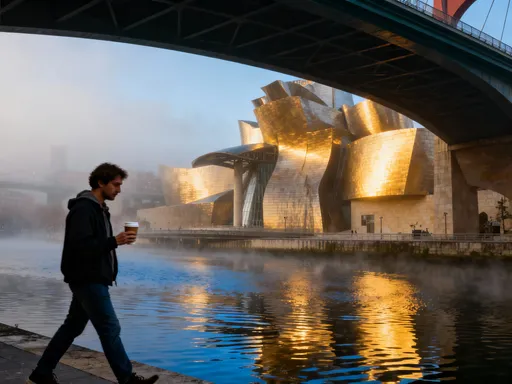
To the world, the Guggenheim Bilbao is an architectural marvel—a shimmering sculpture of titanium curves that redefined what a museum could be. Designed by Frank Gehry and opened in 1997, it became the centerpiece of the city’s rebirth. But to those who live here, it is just one thread in a much richer tapestry. Locals don’t often visit the museum’s interior; instead, they pass by it daily, on their way to work, school, or the riverside park. They see it not as a tourist icon, but as part of their landscape—a familiar shape reflecting the ever-changing light of the Basque sky.
At dawn, the museum’s surfaces catch the pale gold of the rising sun, glowing softly like a sleeping creature. By midday, under clear skies, the titanium panels flash silver and blue, mirroring the river’s surface. And in the evening, when the golden hour bathes the city, the building seems to come alive, its undulating forms shifting with every angle. Yet, for many residents, the real magic lies not in entering the museum, but in viewing it from the outside—free, unmediated, and constantly evolving. There are spots known only to locals: a bench beneath a plane tree across the river, where an elderly man reads his newspaper with the museum in his peripheral vision; a quiet stretch of walkway near the Campo Volantin, where joggers pause to catch their breath and admire the reflection in the water.
The contrast between the museum’s global fame and its local presence is striking. Tourists arrive with cameras and guidebooks, eager to capture the perfect shot. Locals, meanwhile, may glance at it without slowing their pace, as if it were just another part of the city’s skyline. This isn’t indifference—it’s integration. The Guggenheim is no longer a novelty; it’s simply part of Bilbao’s identity, like the hills that cradle the city or the rain that falls so often in spring. And yet, when asked, many residents express quiet pride. Not because the museum put Bilbao on the map, but because it proved that a city could change without losing itself.
For travelers seeking a deeper experience, the best way to appreciate the Guggenheim is to observe it as the locals do. Walk the riverbank at different times of day. Sit on the grassy slope of the park and watch families fly kites in the wind that rolls off the estuary. Notice how schoolchildren on field trips laugh and point, not at the art inside, but at the building’s playful shapes. These unscripted moments reveal more than any exhibit ever could. The Guggenheim, in this context, becomes not just a monument to modern art, but a mirror of the city’s ability to embrace the new while honoring the old.
Along the Ría: The Beating Pulse of Bilbao’s Culture
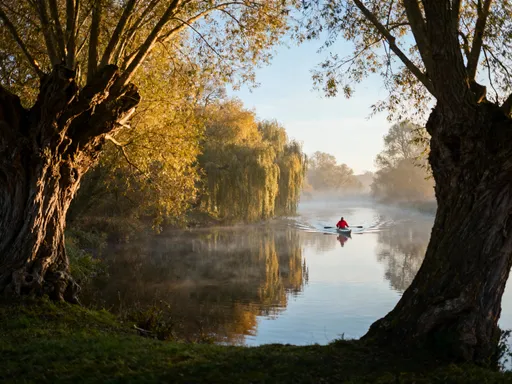
The Ría de Bilbao—the tidal estuary that cuts through the city—has been its lifeblood for centuries. Once lined with docks and cranes, it now serves as a ribbon of connection, binding neighborhoods, histories, and people. Walking its banks from Zorrozaurre in the west to Santurtzi near the coast offers a journey through Bilbao’s layered identity. Here, the past isn’t preserved behind glass; it’s lived in the rhythm of daily life. Fishermen still cast their lines from concrete ledges, just as their fathers did. Artists set up easels near the water’s edge, capturing the play of light on steel and stone. Joggers, dog walkers, and cyclists share the path, moving in a quiet harmony that speaks to the city’s deep sense of community.
The river shaped Bilbao’s economy, but it also shaped its culture. The songs of dockworkers, the calls of shipbuilders, the laughter of families gathering at riverside festivals—all of these have contributed to a soundscape that endures. Even today, the water carries echoes of tradition. On summer evenings, locals gather at the paseo near Portugalete to watch the sunset, sharing wine and conversation as the Vizcaya Bridge—a UNESCO-listed transporter bridge—silhouettes against the sky. It’s a ritual passed down through generations, simple yet profound.
But the true treasures along the Ría are often unseen by casual visitors. Scattered between the well-trodden paths are hidden works of public art—pieces that don’t come with plaques or crowds, but with stories. There’s a small bronze sculpture of a child holding a fish, tucked beneath an archway in Olabeaga, left anonymously in the 1990s as a tribute to the area’s fishing roots. In Deusto, a series of embedded sound installations play fragments of oral histories when triggered by footsteps—voices of elders describing market days, storms, and first loves. These are not attractions; they are invitations to listen.
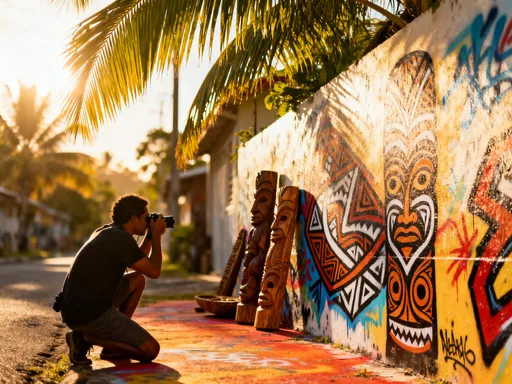
Further east, near the university, a vibrant mural wraps around the side of an old warehouse. Painted by local artists, it depicts the evolution of Bilbao in bold, swirling colors: smokestacks giving way to green rooftops, ships transforming into bicycles, faces of all ages merging into one collective portrait. It’s a visual manifesto of change—not erasure, but growth. To walk the Ría is to understand that culture here is not confined to galleries or festivals. It’s in the water, the wind, the walls, and the people who move through the city with purpose and pride.
Old Town Secrets: Where Tradition Talks in Every Pintxo Bar
The Casco Viejo, Bilbao’s Old Town, is often described as the city’s historic heart. And while its seven original streets—Siete Calles—are indeed ancient, dating back to the 14th century, their true significance lies not in age, but in continuity. This is where tradition doesn’t perform—it persists. Tourists flock to Plaza Nueva, drawn by the lively atmosphere and rows of pintxo bars, but the deeper experience lies in the side alleys, where the noise fades and the rhythm slows. Here, the city reveals itself in subtle ways: in the scent of wood polish from a centuries-old carpentry shop, in the handwritten chalkboard outside a bakery listing that day’s bread, in the way neighbors greet each other by name.
The ritual of the pintxo—small, skewered tapas displayed along bar counters—is more than a meal; it’s a social ritual. Locals don’t sit down for hours-long dinners. Instead, they move from bar to bar, standing at the counter, sharing a pintxo, a glass of wine, and a conversation. Each bar has its specialty: one might offer a delicate hake in green sauce on toasted bread, another a rich croquette with a hint of nutmeg. The food is humble, seasonal, and deeply rooted in Basque cuisine. But the real magic is in the exchange—the brief connection between strangers, the nod of recognition between regulars, the warmth of being remembered.
Take Bar Gure Toki, a modest spot tucked between two taller buildings on Somera Street. It has no sign, no website, no social media presence. But step inside, and the owner, Miren, greets you as if you’ve been coming for years. After just one visit, she’ll remember your name, your drink, even your preference for olives over capers. Her family has run the bar for three generations, and the walls are lined with photos of weddings, festivals, and everyday moments that span decades. This is not hospitality as performance—it’s hospitality as heritage.
And then there’s the language. In many bars, especially in the early evening, Basque flows as naturally as the wine. It’s not a tourist attraction; it’s the mother tongue of many locals, a living language that survived centuries of pressure and is now thriving in schools, media, and daily life. To hear it spoken here, over laughter and clinking glasses, is to witness culture in its most organic form. The Casco Viejo doesn’t need to explain itself. It simply is—worn, welcoming, and full of stories waiting to be shared by those willing to listen.
The Soundtrack of the Streets: Music, Language, and Living Heritage
If Bilbao has a soundtrack, it is not one melody, but many—woven together like the threads of a tapestry. The most enduring is the sound of Euskara, the Basque language, spoken in homes, markets, and schools. Unlike many regional languages preserved mainly in textbooks, Basque is vibrantly alive. Children learn it in public schools, radio stations broadcast in it, and street signs display it alongside Spanish. To hear it in a bakery, a doctor’s office, or a neighborhood meeting is to understand that language here is not a relic, but a living force—a marker of identity that has weathered time and change.
Music, too, pulses through the city’s veins. On Sunday mornings, it’s common to hear the lively, rhythmic strains of the trikitixa—the Basque diatonic accordion—played by street musicians in Plaza Moyua or along the river. These melodies, often accompanied by the tambourine-like txistu flute, are not performed for coins alone. They are expressions of joy, memory, and continuity. Some players are young, learning from grandparents; others are elders, keeping traditions alive simply because they love them. Their music doesn’t demand attention—it invites participation, drawing listeners into a shared cultural moment.
Choral singing is another deep-rooted tradition. In neighborhood churches and community halls, local choirs gather to rehearse songs passed down for generations. These aren’t grand performances for tourists; they are acts of community, of belonging. During festivals like Azkena Rock or the Semana Grande in summer, the city fills with sound—jazz in the parks, folk in the plazas, rock along the riverbanks. But even in quieter months, music finds its way into daily life. A group of retirees might sing together at a senior center. A school choir might perform at a local market. These moments, small and unremarkable to outsiders, are the true heartbeat of Bilbao’s cultural life.
The seasons, too, are marked by sound. In winter, the solemn tones of church bells blend with the soft hum of holiday carols. In spring, the city awakens with school concerts and open-air recitals. Even the rain, which falls frequently, becomes part of the rhythm—pattering on stone, echoing in courtyards, accompanying the footsteps of those who walk without haste. To listen in Bilbao is to understand that culture is not something you see from a distance. It is something you hear, feel, and live.
Neighborhoods That Tell Stories: From Abando to Deusto
To know Bilbao is to know its neighborhoods—each with its own character, history, and rhythm. Abando, centered around the grand Alameda and the bustling Gran Vía, is the city’s modern face. Wide avenues, department stores, and the elegant Arriaga Theatre give it a cosmopolitan air. Yet even here, tradition persists. The Mercado de la Ribera, one of Europe’s largest indoor markets, hums with activity every morning. Vendors call out the day’s freshest fish, baskets overflow with seasonal produce, and elderly women haggle over prices with practiced ease. It’s a place of commerce, yes, but also of connection—a daily ritual that binds the community.
Just across the river lies Deusto, a district shaped by the presence of the University of Deusto and its surrounding green spaces. Here, the pace slows. Tree-lined streets wind past ivy-covered villas and quiet squares where students read between classes. The university, founded by the Jesuits in 1886, is not just an academic institution—it’s a cultural anchor. Its library hosts public lectures, its chapel offers moments of quiet, and its gardens welcome all, regardless of affiliation. On weekends, families picnic in Doña Casilda Park, the city’s largest green space, where ducks glide across ponds and children chase bubbles in the breeze.
What unites these neighborhoods is not architecture or economy, but values. Public spaces are treated as shared treasures. Libraries are well-used and well-loved. Markets are not tourist traps, but essential parts of daily life. And art—whether in museums or hidden in alleyways—is seen not as luxury, but as necessity. One afternoon, in a narrow street off the main avenue, I met Javier, a painter in his late sixties who has lived and worked in Deusto his entire life. His studio, above a shoe repair shop, is filled with canvases depicting scenes of Bilbao: a fisherman mending his net, a woman carrying groceries home, the Guggenheim reflected in a rain puddle. “I don’t paint what’s famous,” he said. “I paint what’s true.” His work, unseen by most tourists, captures the soul of the city in a way no postcard ever could.
Other districts, like Ibaiondo and San Francisco, offer their own stories. Ibaiondo, once industrial, now blends creative studios with community gardens. San Francisco, near the river’s bend, is home to quiet residential streets and a growing number of artisan workshops. Each area contributes to the city’s mosaic, proving that Bilbao’s culture isn’t centralized—it’s distributed, lived, and constantly renewed by those who call it home.
How to Experience Bilbao Like a Cultural Insider
To experience Bilbao deeply, one must shift from sightseeing to sensing. This means moving beyond the checklist of attractions and aligning with the city’s natural rhythms. Visit in the shoulder seasons—spring and autumn—when the rain brings out the green of the hills and the light is softest on the river. Arrive early in the morning, when the markets open and the bakeries release their first loaves. Walk without a map, allowing yourself to get slightly lost in the Casco Viejo’s winding streets. These are the moments when Bilbao reveals itself—not in grand gestures, but in quiet details.
Choose walks over guided tours. While organized excursions offer valuable insights, they often follow predictable paths. Instead, follow locals. Take the Euskotren to Santurtzi and walk back along the river. Stop at a small café where the menu is handwritten and the owner speaks slowly, kindly, in Basque. Sit in a neighborhood park and watch life unfold: children playing, dogs chasing balls, elders sharing stories. These are not “attractions”—they are the fabric of daily life, and they offer a richer understanding than any museum exhibit.
Support small artisans. In the Old Town, look for family-run shops selling handmade ceramics, woven textiles, or locally crafted leather goods. Avoid the over-commercialized pintxo bars near the plaza; instead, follow residents into quieter spots where the food is homemade and the atmosphere unpretentious. A simple gesture—ordering in Basque, even if just “kafe bat, mesedez” (one coffee, please)—can open doors and spark warm smiles.
Most importantly, slow down. Bilbao doesn’t reward haste. It rewards presence. It asks not for your camera, but your attention. To walk its streets with curiosity and respect is to be welcomed, not as a tourist, but as a temporary neighbor. And in that quiet exchange—between visitor and city, between past and present—lies the true magic of Bilbao.
Why Bilbao Changes How You See Cities
Bilbao does not shout. It does not dazzle with neon or demand admiration. It speaks in whispers—in the clink of glasses in a pintxo bar, in the echo of Basque in a marketplace, in the way the river reflects the changing sky. What makes this city extraordinary is not its famous museum or its sleek bridges, but its authenticity. It proves that transformation need not mean erasure. That progress can honor memory. That a city can grow without losing its soul.
In an age where so many destinations cater to the camera rather than the heart, Bilbao stands as a quiet rebuke. It reminds us that culture is not something to be consumed, but lived. It is not a performance, but a practice—repeated daily in language, food, music, and connection. To visit Bilbao is to be invited into that practice, even if just for a few days. It is to see that the most powerful stories are often the quietest—the ones told not in headlines, but in the way a grandmother teaches her granddaughter a folk song, or a painter captures the light on a rainy afternoon.
And so, the lesson of Bilbao extends beyond its borders. It challenges travelers to look deeper, to listen longer, to move slower. To seek not just the iconic, but the intimate. To understand that every city has hidden corners, if only we pause to find them. Bilbao doesn’t need to be believed. It simply asks to be felt. And for those who take the time, it offers not just a memory, but a transformation—one that lingers long after the journey ends.