Snap-Worthy Seoul? No—This Is Daejeon’s Moment
You know that feeling when you stumble upon a place so unexpectedly cool it makes your camera roll feel insta-worthy? That was me in Daejeon. Forget the usual tourist trails—this city’s themed zones are quiet game-changers. From retro-futuristic streets to art alleys that look painted by dreams, I didn’t just visit—I experienced. And every corner screamed, “Take my photo.” If you're chasing authenticity with serious visual payoff, Daejeon’s hidden gems deserve your next shot. Nestled in the heart of South Korea and often overshadowed by Seoul and Busan, Daejeon is stepping into the spotlight as a destination where innovation, art, and nature converge in surprisingly photogenic harmony. This isn’t a city built for filters—it’s one that inspires them.
Beyond the Ordinary: Discovering Daejeon’s Visual Identity
Daejeon has long been recognized as South Korea’s science and technology hub, home to numerous research institutes and universities that have shaped the nation’s forward-thinking reputation. Yet, beyond its reputation as a center of innovation lies a quieter, more artistic transformation—one that’s redefining the city’s visual language. In recent years, Daejeon has embraced a bold urban revitalization strategy, turning overlooked neighborhoods into immersive, themed districts that celebrate creativity, community, and contemporary design. These spaces are not just functional; they are deliberately crafted to be experienced through the lens of a camera, offering travelers a refreshing alternative to the crowded, oft-photographed alleys of Seoul or the historic temples of Gyeongju.
What sets Daejeon apart is its balance of modernity and charm. Unlike larger cities where development can feel overwhelming, Daejeon’s growth has been thoughtful, preserving breathing room between installations and allowing natural light to play across surfaces in ways that enhance visual storytelling. The city’s themed zones—each with its own distinct aesthetic—invite exploration without the pressure of ticking off a checklist. Whether it’s a retro-futuristic mural glowing under soft streetlights or a quiet hanok courtyard framed by cherry blossoms, the city rewards slow, intentional observation. This makes it especially appealing to travelers who value authenticity and are looking for moments that feel personal, not performative.
The rise of these creative districts reflects a broader shift in how South Korea approaches urban culture. Cities are no longer judged solely by their economic output but also by their quality of life and cultural offerings. Daejeon has leaned into this trend, investing in public art, pedestrian-friendly streets, and interactive installations that engage both locals and visitors. For photographers, this means abundant opportunities to capture scenes that blend technology with tradition, color with contrast, and motion with stillness. The result is a cityscape that feels both familiar and refreshingly original—a place where every photograph tells a story of transformation, resilience, and quiet beauty.
Expo Park & the Legacy of Innovation
At the core of Daejeon’s modern identity stands Expo Park, a sprawling green space born from the 1993 Daejeon Expo—an international event that marked Korea’s emergence as a global leader in science and technology. Today, the park serves as both a public recreation area and a living monument to progress, seamlessly integrating nature with futuristic design. It is here that Daejeon’s dual identity as a city of science and soul becomes most apparent. Towering trees line paved pathways, while sleek metal sculptures and reflective water features punctuate the landscape, creating a dynamic interplay between organic and engineered elements.
For photographers, Expo Park offers a wealth of visual opportunities. The centerpiece, the Expo Tower, rises like a silver needle against the sky, its mirrored surface catching shifting light throughout the day. Captured at golden hour, the tower glows with warm hues, its reflection stretching across the adjacent lake in long, painterly streaks. Early morning visits reveal a different mood—mist curling over the water, joggers passing silently beneath glowing streetlamps, and the soft hum of the city just beginning to wake. These quieter moments provide ideal conditions for long-exposure shots that emphasize tranquility and depth.
Scattered throughout the park are artistic installations that echo the themes of the original Expo: exploration, connectivity, and human ingenuity. One standout is the Solar Fountain, a kinetic sculpture that activates with sunlight, sending arcs of water into the air in rhythmic patterns. Photographed with a fast shutter speed, the droplets freeze mid-air like suspended crystals; with a slower setting, they blur into ethereal ribbons of motion. Nearby, abstract steel structures inspired by molecular models and space-age architecture offer bold geometric lines perfect for framing compositions or creating striking silhouettes at sunset.
What makes Expo Park particularly valuable for visual storytelling is its openness. Unlike more manicured urban parks, it allows for spontaneous exploration—there are no barriers between visitor and artwork, no roped-off zones. This accessibility encourages intimate, immersive photography. Whether capturing a child reaching toward a glowing orb sculpture or a couple framed against a backdrop of rippling water and sky, the park fosters moments that feel genuine and unposed. It’s a place where innovation isn’t just displayed—it’s lived, breathed, and beautifully photographed.
Hanbat Art Street: Where Creativity Paints the Pavement
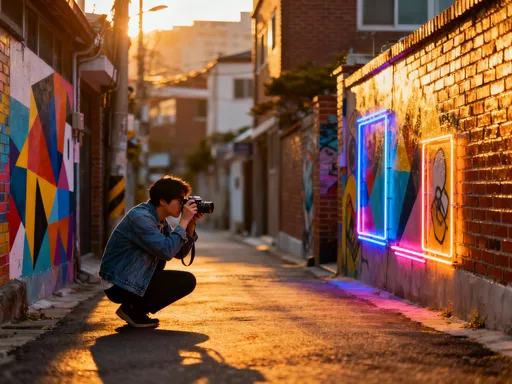
If Expo Park represents Daejeon’s intellectual spirit, Hanbat Art Street embodies its creative heartbeat. Once a quiet residential lane, this vibrant corridor has been transformed into an open-air gallery where walls serve as canvases and the pavement pulses with color. Stretching over several blocks, the street is home to dozens of murals created by local and international artists, each telling a story through bold brushstrokes, surreal imagery, and symbolic motifs. From whimsical animals peeking around corners to large-scale portraits of Korean cultural icons, the artwork invites interaction, wonder, and, of course, photography.
The evolution of Hanbat Art Street began as part of a city-led initiative to revitalize underused urban spaces and foster community pride. What started as a small pilot project quickly gained momentum, drawing artists eager to contribute to Daejeon’s growing reputation as a cultural destination. Today, the street is a hub of activity, especially on weekends when local vendors set up stalls selling handmade crafts, artisanal snacks, and custom-printed postcards. Street performers—musicians, dancers, and living statues—add another layer of energy, turning the area into a dynamic stage where art lives beyond the walls.
For photographers, Hanbat Art Street offers endless compositional possibilities. The murals themselves are rich in texture and contrast, making them ideal subjects for both wide-angle and close-up shots. Some artists incorporate optical illusions, such as staircases that appear to descend into another world or windows that open onto imaginary landscapes—perfect for playful, perspective-bending images. Others use the architecture of the buildings to extend their artwork, painting doors that seem to lead nowhere or windows with figures waving from inside. These details reward careful observation and creative framing.
The best time to photograph Hanbat Art Street is mid-morning to early afternoon, when sunlight hits the walls at an angle that enhances depth and minimizes harsh shadows. Overcast days also work well, providing soft, even lighting that brings out the saturation of the colors without glare. Because the street is relatively narrow, using a moderate wide-angle lens allows you to capture both the artwork and its surroundings, adding context and atmosphere. Including people in your shots—whether a child pointing at a painted tiger or a couple taking a selfie in front of a floral mural—adds scale and narrative, turning static images into living moments.
Daedeok Innopolis: Science Meets Aesthetic
Just west of central Daejeon lies Daedeok Innopolis, a sprawling research and development cluster that houses some of Korea’s most advanced scientific institutions. While it may sound like an unlikely destination for photography, this district reveals a strikingly aesthetic side upon closer inspection. With its sleek glass towers, minimalist landscaping, and precisely aligned walkways, Daedeok Innopolis exudes a quiet, cyberpunk elegance that appeals to fans of architectural and urban photography. It’s a place where function meets form in harmonious balance, offering compositions defined by symmetry, reflection, and clean lines.
The visual appeal of Daedeok Innopolis lies in its modernist design philosophy. Buildings feature floor-to-ceiling windows that mirror the sky and surrounding greenery, creating ever-changing reflections that shift with the weather and time of day. During sunrise and sunset, the glass façades glow in warm amber and pink tones, while at night, interior lighting turns the structures into illuminated glass boxes, casting long shadows across polished concrete plazas. These conditions are ideal for high-contrast black-and-white photography or moody, cinematic color shots that emphasize solitude and scale.
One of the most photogenic spots is the central plaza, where a series of low-lying water features and geometric planters create a Zen-like atmosphere. Early morning visits reveal the plaza nearly empty, with only a few researchers walking between buildings, their silhouettes elongated by the low sun. This sense of stillness enhances the futuristic feel, making the space resemble a set from a sci-fi film. Reflections in the shallow pools double the architectural forms, allowing for symmetrical compositions that draw the eye toward the center of the frame.
Photographers should approach Daedeok Innopolis with respect for its primary function as a workplace. While public areas are accessible, drone use and intrusive photography near research facilities are prohibited. The best strategy is to focus on exterior spaces—plazas, footbridges, and landscaped zones—where the architecture speaks for itself. Using a polarizing filter can help reduce glare on glass surfaces, while a tripod enables long exposures that smooth out movement and emphasize stillness. Whether capturing the crisp lines of a modernist building or the soft blur of a passing figure against a reflective wall, Daedeok Innopolis offers a unique opportunity to photograph the beauty of innovation.
Jungangno Underground Shopping & Street Culture
Beneath the bustling streets of central Daejeon lies Jungangno, a vast underground shopping complex that functions as both a commercial hub and a cultural crossroads. Spanning over a kilometer and connecting multiple subway stations, this subterranean network is lined with fashion boutiques, snack kiosks, beauty salons, and convenience stores. But beyond its practical function, Jungangno pulses with youth energy and urban rhythm, making it a compelling subject for street photography. The interplay of neon signage, escalator reflections, and spontaneous human interactions creates a visual language all its own—one that captures the raw, unfiltered essence of city life.
The lighting in Jungangno is particularly photogenic. Fluorescent tubes, LED displays, and colorful store signs cast a kaleidoscope of hues across the tiled floors and glass shopfronts. During evening hours, the space takes on a dreamlike quality, with light bouncing off polished surfaces and creating abstract patterns. Escalators become ribbons of motion, their moving steps blurred in long exposures, while reflections in mirrored walls produce infinite regressions that disorient and fascinate. These elements allow photographers to experiment with abstraction, turning everyday scenes into artistic compositions.
Weekends bring an extra layer of vibrancy. It’s common to encounter impromptu dance performances, where groups of young people gather to showcase choreography to K-pop beats. These moments are fleeting but powerful—full of energy, coordination, and joy. Capturing them requires readiness and discretion; using a fast shutter speed freezes the motion, while a wider aperture isolates the dancers from the busy background. The surrounding crowd, often filming on their phones, adds context and scale, emphasizing the communal nature of the experience.
For photographers, Jungangno offers a rare glimpse into the informal culture of Korean urban youth. Unlike curated tourist spots, this space feels authentic and unscripted. The fashion is eclectic, the energy is spontaneous, and the interactions are real. By focusing on details—a hand-painted sign in a small café, a vintage jacket in a thrift store window, a couple sharing a snack on a bench—photographers can tell micro-stories that reflect the diversity and dynamism of contemporary city life. It’s a reminder that compelling visuals don’t always come from grand vistas—they can emerge from the quiet moments between the noise.
Yuseong Hot Springs & Riverside Serenity
Just a short distance from the urban core, Yuseong offers a striking contrast to Daejeon’s modern districts. Known for its natural hot springs and tranquil riverside setting, this neighborhood provides a slower, more meditative pace that is equally rewarding for photography. Here, the focus shifts from bold colors and sharp lines to soft tones, gentle motion, and cultural detail. Traditional hanok-style teahouses dot the landscape, their curved roofs and wooden lattices framing views of the flowing Gapcheon River. Steam rises from thermal baths at dawn, curling into the cool morning air like whispers of history.
Yuseong’s hot springs have been celebrated for centuries for their therapeutic properties, and the area retains a sense of reverence and calm. Public bathhouses and wellness centers blend seamlessly with nature, often built alongside the river or tucked into groves of pine trees. Photographing these spaces requires patience and sensitivity—long exposures of flowing water, soft focus on mist-covered pathways, and careful attention to light filtering through tree canopies. Early morning is the ideal time, when fog hovers over the water and the first visitors arrive wrapped in robes, their footsteps muffled by dew-covered grass.
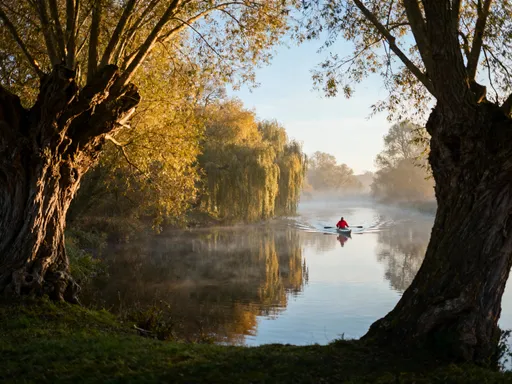
The riverside walking paths offer a continuous sequence of quiet compositions. Stone bridges, lanterns, and calligraphy-covered signs provide cultural anchors, while reflections in the still water double the scenery, creating symmetrical images that feel balanced and serene. Unlike the high-energy zones of the city, Yuseong invites contemplative photography—images that breathe, that allow space for silence. A single shot of a floating leaf drifting downstream or a lone bench facing the river can carry emotional weight, evoking themes of rest, renewal, and connection to nature.
For those interested in cultural details, Yuseong also hosts seasonal festivals that celebrate traditional Korean practices. The Lotus Lantern Festival, held each spring, transforms the riverbanks with hundreds of floating lanterns, their warm glow reflecting in the water. These events offer opportunities for both wide-angle night shots and intimate close-ups of handmade lanterns and participants in traditional attire. Even outside of festivals, the neighborhood’s aesthetic remains consistently poetic—a reminder that beauty often resides in stillness, not spectacle.
Making the Most of Your Shoot: Practical Tips for Photographers
To fully experience Daejeon’s visual richness, thoughtful planning is essential. Each district offers unique lighting conditions, crowd levels, and access points, so timing your visit strategically can make a significant difference in the quality of your photographs. Begin your day early—between 6:00 and 8:00 AM—to capture Expo Park and Yuseong at their most serene. The soft morning light enhances natural tones, reduces harsh contrasts, and increases your chances of photographing scenes without crowds. Midday is best reserved for Hanbat Art Street and Jungangno, where overhead lighting minimizes shadows on vertical murals and indoor spaces remain consistently lit.
When it comes to camera settings, flexibility is key. In outdoor areas with mixed lighting, use aperture priority mode (f/8 to f/11) for balanced depth of field. For low-light environments like Jungangno or evening shots in Yuseong, switch to manual mode with a slower shutter speed (1/30s to 1s) and higher ISO (800–1600), stabilizing your camera with a compact tripod or steady surface. A polarizing filter will help manage reflections on glass and water, while a neutral density filter enables longer exposures in bright conditions, especially useful for smoothing water movement in rivers or fountains.
Respect for local customs and privacy is crucial. Always ask permission before photographing individuals, especially in cultural or private settings. Avoid using drones in public parks or near research facilities unless authorized. Dress comfortably and in layers, as Daejeon’s weather can shift quickly, and be prepared to walk extensively—most attractions are best explored on foot or via the efficient subway and bus system. Carry a lightweight backpack with essentials: extra batteries, memory cards, a small towel, and a reusable water bottle.
To maximize your day, consider pairing locations: start with Expo Park, move to Hanbat Art Street for midday, spend the afternoon in Jungangno, and end with a peaceful evening walk along the Yuseong riverfront. This itinerary balances energy and tranquility, urban and natural, ensuring a diverse and fulfilling photographic journey. Daejeon may not yet be on every traveler’s radar, but for those who seek originality, authenticity, and visual depth, it is a destination that delivers—quietly, beautifully, and without pretense. The next time you plan a trip to South Korea, let Daejeon be your frame of reference. Its moments are waiting to be seen, and remembered.